

Table of Contents
- Why Leather Fire Helmet Maintenance Matters
- Daily Inspection and Cleaning Routine
- Step-by-Step Guide to Cleaning Soot Off Leather Fire Gear
- Choosing the Best Leather Conditioner for Fire Helmets
- When to Retire or Replace Leather Components
- Setting a Leather Fire Helmet Maintenance Schedule
- Proper Storage and UV Protection for Long-Term Use
- Conclusion
- Frequently Asked Questions
Last Updated: September 9, 2026
Why Leather Fire Helmet Maintenance Matters
A structural fire helmet's leather shell endures heat exposure, carcinogen-laden smoke, and punishing physical impacts that degrade protective equipment over time. These leather maintenance tips are not about vanity; they are about preserving the structural integrity of gear that stands between you and thermal degradation on every call. At EH Coverings, we build American-made leather accessories designed to last a full career, which is why we emphasize preventative maintenance that protects your investment.
Leather is a porous, organic material that loses moisture under heat and dries out when exposed to harsh cleaning agents. When the leather finish cracks or the shell loses hydration, the helmet becomes more vulnerable to heat transfer and physical damage. Many departments find that consistent care extends the usable life of a leather helmet shell by years, delaying costly replacements and keeping crews in compliant, service-ready gear.
Below, we'll walk through daily inspection habits, a proven cleaning process, conditioner selection, and storage practices that protect your helmet between fires. The routine takes minutes once you build it into your schedule, and it directly impacts how long your gear performs at its peak.
Daily Inspection and Cleaning Routine
A quick post-incident inspection catches small problems before they become safety hazards. After every fire, wipe the leather shell with a damp rag to remove loose soot and surface debris while the contaminants are still fresh, then allow the helmet to air dry away from direct heat.
During this daily check, examine the shell for fresh scorching, discoloration, or stiffness that signals the leather is losing its natural oils. Run your fingers along the brim and dome to feel for rough patches or developing cracks. Look closely at the chinstrap, hardware, and liner adjustment points to confirm nothing has loosened or warped under heat exposure.
A common mistake is letting soot and smoke residue sit on the leather for days between washes. That residue is acidic and accelerates cracking prevention failures, so prompt contaminant removal matters more than deep cleaning frequency (the CDC). Keep a dedicated damp rag in your locker and make the two-minute wipe-down part of your standard off-duty routine.
Step-by-Step Guide to Cleaning Soot Off Leather Fire Gear
Cleaning soot off leather fire gear requires mild cleaning agents and a gentle hand; aggressive scrubbing drives particulates deeper into the leather grain and strips protective oils. For routine soot removal, follow this proven sequence:
- Remove loose debris. Use a soft, dry brush to sweep away dry soot and dust from the entire shell, including seams and crevices.
- Prepare a mild wash. Mix a small amount of pH-balanced leather soap or a dedicated decon soap with lukewarm water. Avoid household detergents, which damage the leather finish.
- Wipe, don't scrub. Dip a damp rag in the solution, wring it thoroughly, and wipe the shell in gentle circular motions. Work in small sections and rinse the rag often.
- Rinse with a clean damp rag. Remove all soap residue, which can attract dirt and dull the finish if left to dry.
- Air dry completely. Set the helmet on a clean towel away from direct sunlight and heat sources. Never use low-heat drying appliances or a hair dryer on the leather.
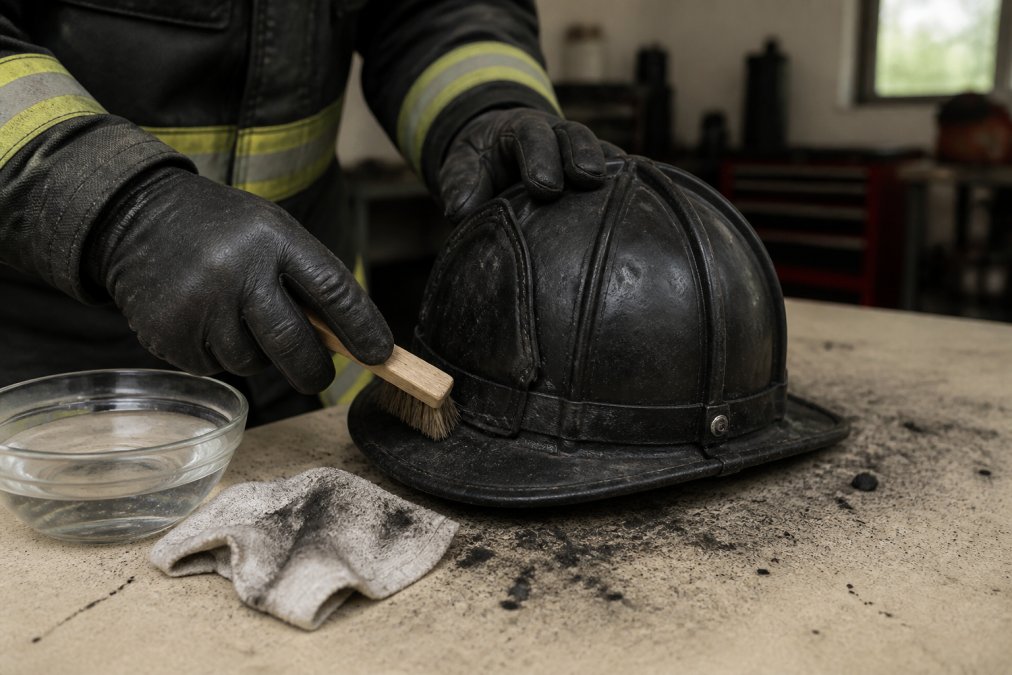
For heavy contamination after structure fires, a deeper wash using a purpose-built decon soap removes embedded carcinogens and stubborn smoke odor that standard wipes leave behind. Products like EH Coverings' All In One Liquid Decon Soap combine deep cleaning with leather-safe ingredients, leaving the shell clean without stripping necessary moisture.

Choosing the Best Leather Conditioner for Fire Helmets
The best leather conditioner for fire helmets replenishes the natural oils that heat exposure and cleaning strip away, restoring flexibility and water resistance to the shell. But not all conditioners are created equal, and the wrong choice can do more harm than good. This section provides a chemical compatibility guide to help you make an informed decision.
Safe and Effective Ingredients:
- Neatsfoot oil: A traditional choice that penetrates deeply to restore flexibility. Use it sparingly, as over-application can leave the leather overly soft and prone to stretching.
- Lanolin: A natural wax that provides excellent water resistance and conditioning. It is a common ingredient in high-quality leather balms.
- Beeswax: Often combined with oils to create a protective barrier against moisture and mild abrasion. Look for conditioners that blend beeswax with a penetrating oil.
- Mink oil: Another penetrating oil that softens leather, but it can darken the finish. Test on an inconspicuous area first.
Ingredients to Avoid:
- Silicone-based products: These create a shiny, synthetic surface that can trap dirt and prevent the leather from breathing, leading to premature drying and cracking.
- Petroleum distillates (e.g., mineral oil): These can break down the leather's natural fibers over time and leave a greasy residue that attracts contaminants.
- Products with added dyes or pigments: These can rub off onto your turnout gear or skin and may not be colorfast on your helmet's specific finish.
Application Technique for Maximum Absorption:
- Clean first: Always apply conditioner to a clean, dry shell. Dirt and soot will be sealed in if you condition over them.
- Warm the leather (optional): On a cool day, let the helmet sit at room temperature for 30 minutes. Slightly warm leather absorbs oils more readily.
- Apply thin, even layers: Use a soft, lint-free cloth. Apply a small amount and work it in with circular motions, focusing on the brim and areas that flex.
- Let it absorb: Allow the conditioner to sit for 15-20 minutes. If the leather looks dry in spots, apply a second thin layer.
- Buff to a matte finish: After absorption, use a clean, dry cloth to buff away any excess. The surface should feel supple, not greasy or sticky.
A common pattern among veteran firefighters is to condition their helmets twice a year, once in the spring and once in the fall, following leather maintenance tips to prepare for the temperature extremes of summer and winter. This schedule, combined with a light application whenever the leather feels dry to the touch, provides a robust defense against dehydration.
Leather hydration is the single most important factor in cracking prevention. A supple shell flexes under impact instead of fracturing, which is why understanding the chemistry of your conditioner is a core part of any leather fire helmet maintenance schedule.
When to Retire or Replace Leather Components
Inspection for structural integrity should determine when leather components leave service, not cosmetic appearance. Retire a leather shell immediately if you find deep cracks that expose the underlying material, significant charring that compromises the shell's shape, or warping that prevents the liner from seating correctly.
Hardware failures also demand attention. Check the brass front holder and chinstrap hardware for bending, cracking, or loose rivets that could release under stress. Leather that has become brittle and inflexible, even without visible cracks, has lost its protective properties and needs replacement.
Most manufacturers publish service life guidance and inspection criteria for structural fire helmets, and your department's regulatory compliance standards may set additional retirement rules. When replacement parts are needed, EH Coverings offers American-made brass front holders and leather accessories designed to fit MSA, Cairns, and Morning Pride helmets, so you can restore a veteran shell to service-ready condition without replacing the entire helmet.
Setting a Leather Fire Helmet Maintenance Schedule
A leather fire helmet maintenance schedule prevents the gradual neglect that ruins gear faster than any single fire. Build your routine around three intervals:
| Maintenance Task | Frequency | Time Needed |
|---|---|---|
| Post-incident soot wipe-down | After every fire | 2-3 minutes |
| Full decon wash and rinse | Monthly or after heavy fires | 15-20 minutes |
| Deep conditioning and hardware check | Every 3-6 months | 30 minutes |
Post this schedule at your station or set a recurring calendar reminder. The habit takes less than an hour per quarter but delivers years of additional service from a helmet that costs hundreds of dollars to replace.
Proper Storage and UV Protection for Long-Term Use
Long-term storage for seasonal use or off-duty periods requires protecting the leather from its two biggest enemies: UV exposure and dry air. Ultraviolet light bleaches and degrades the leather finish, while low-humidity environments draw out natural moisture and cause cracking. This section goes beyond basic advice to provide a comprehensive, step-by-step protocol for seasonal and extended storage.
The Science of UV Degradation: Ultraviolet (UV) radiation, particularly UVA and UVB rays, breaks down the collagen fibers in leather (peer-reviewed research). This process, called photodegradation, causes the leather to become brittle, lose its tensile strength, and fade in color. Even indirect sunlight through a window can cause significant damage over months. The finish on your helmet is the first line of defense, but it is not a permanent shield.
Preparing Your Helmet for Extended Storage (e.g., Off-Season, Light Duty):
- Full Decontamination: Perform a complete decon wash as described in the cleaning section. Ensure all soot, smoke residue, and salts are removed. These contaminants are hygroscopic, meaning they attract moisture, which can lead to mold growth during storage.
- Deep Conditioning: Apply a generous, but not excessive, layer of your chosen leather conditioner. This is the time to ensure the leather is fully hydrated before it goes into a potentially dry environment.
- Hardware Check and Lubrication: Inspect all brass hardware and rivets. Apply a very light coat of a non-petroleum-based lubricant (e.g., a silicone-free gun oil) to moving parts like swivel joints to prevent corrosion. Wipe away any excess.
- Stuff the Dome: To maintain the helmet's shape, loosely stuff the dome with acid-free tissue paper or a clean, soft cotton cloth. Do not use newspaper; the ink can transfer onto the liner.
Choosing the Right Storage Environment:
- Ideal Conditions: A cool, dark, and dry environment with a stable temperature between 60°F and 75°F and a relative humidity of 40-50% (si.edu). A dedicated gear closet or a climate-controlled room is ideal.
- Avoid: Attics, basements, garages, and apparatus bays. These areas are prone to extreme temperature swings, high humidity, and exposure to chemical fumes from vehicles or cleaning solvents.
- Storage Container: Use a fabric helmet bag or a breathable cotton pillowcase. Never use a plastic bag or an airtight plastic container. Trapped moisture will create a microclimate that promotes mold and mildew growth, which can permanently stain and weaken the leather.
- Elevation: Store the helmet on a shelf or a padded hanger, not directly on a concrete floor. Concrete wicks moisture and can cause the leather to become damp.
Seasonal Storage Checklist:
- Monthly: Briefly inspect the helmet for any signs of mold, mildew, or stiffness. If the environment is particularly dry, you may need to check more frequently.
- Quarterly: Remove the helmet from its bag, let it air out for a few hours in a shaded, dry area, and lightly buff the surface with a soft cloth to redistribute any natural oils.
- Before Returning to Service: Perform a full inspection, apply a light coat of conditioner, and allow it to absorb for 24 hours before wearing.
A dedicated storage space also protects the leather from chemical exposure. Keep helmets away from cleaning solvents, fuels, and battery acid that may be present in apparatus bays or gear rooms. These chemicals can off-gas and cause invisible damage to the leather's fibers.
Conclusion
Your leather fire helmet is a piece of protective equipment that earns its keep through decades of hard service, but only if you give it the maintenance it demands. Daily wipe-downs, monthly decon washes, regular conditioning, and smart storage prevent the cracking and thermal degradation that force premature retirement. When components do wear out, replacing them with quality American-made parts keeps your trusted shell in service.
EH Coverings builds durable brass front holders and custom leather accessories that fit industry-standard helmets, so you can maintain and restore your gear with confidence. Get started with EH Coverings and keep your helmet ready for the next call.
Frequently Asked Questions
What is the best way to clean leather fire helmet accessories without damaging them?
Start by removing loose soot and debris with a soft, dry brush. Mix a small amount of mild cleaning agent, like EH Coverings' All In One Liquid Decon Soap, with water. Dampen a clean rag with the solution and wipe the leather in a circular motion. Avoid soaking the leather, and never use harsh detergents or solvents. Rinse the rag and wipe again to remove soap residue, then pat dry with a towel.
How often should you condition leather fire helmet gear?
Condition your leather fire helmet gear every three to six months, depending on how often you run calls and the conditions you face. If the leather feels dry, looks dull, or shows light cracking, condition it sooner. Heat, soot, and decontamination washing strip natural oils from the leather shell. A dedicated leather conditioner designed for fire helmets helps restore moisture and flexibility.
Can you use standard leather cleaners on fire helmet accessories?
No. Standard leather cleaners often contain ingredients that break down fire-resistant coatings or leave oily residues that attract dirt. Fire helmet leather needs products designed for PPE maintenance. Look for a pH-balanced cleaner and a conditioner made specifically for structural fire helmet leather. These products clean effectively without compromising the leather's integrity or the finish that protects it from heat and moisture.
How do you store leather helmet accessories to prevent cracking?
Store your helmet and leather accessories in a cool, dry place away from direct sunlight and extreme temperature changes. Avoid storing gear in your vehicle's trunk where heat builds up. Keep the helmet off concrete floors to prevent moisture absorption. Use a dedicated helmet bag or a shelf in your locker. Proper storage protects the leather from UV damage and helps it retain its shape.