

Table of Contents
- The Real Cost of Leather Helmet Accessories
- Durability and Service Life: What You're Actually Getting
- Custom Leather Fire Helmet Parts and Compatibility
- Fire Helmet Accessory Maintenance Tips for Long-Term Value
- NFPA 1971 Helmet Accessory Compliance and Safety Standards
- Comparing Leather Accessories to Synthetic Alternatives
- The Career Longevity Advantage
- Conclusion: Making Your Decision
- Frequently Asked Questions
Last Updated: September 3, 2026
The Real Cost of Leather Helmet Accessories
When you're evaluating whether leather helmet accessories are worth it, you're really asking two questions: What will they cost me over time, and what will I actually get in return? The answer depends entirely on your priorities as a firefighter and how you define value.
Leather helmet accessories range from simple brass front holders to custom brims and chin straps. At EH Coverings, we've built our reputation on understanding exactly what career firefighters need from their gear. The real cost isn't just the upfront purchase price, it's the maintenance, the replacement cycles, and whether the accessory actually solves a problem you have.
A natural leather brim from EH Coverings runs $325. A carved brass front holder starts at $45, while customizable brass options run $65 to $75. These aren't cheap, but they're not luxury pricing either. What matters is whether they'll outlast cheaper alternatives and whether they'll genuinely improve your helmet's functionality or appearance throughout your career.

The honest answer: leather helmet accessories are worth it if you're committed to maintaining them and you prioritize durability over convenience. If you treat them as a one-time investment and forget about them, they won't deliver that value. If you're willing to condition and inspect them regularly, they'll likely outlast your entire career on the job.
Durability and Service Life: What You're Actually Getting
Leather helmet accessories built from quality American leather can last 20, 30, or even 40 years with proper care (peer-reviewed research). That's the core promise of custom leather fire helmet parts, longevity that matches or exceeds your career span.
The durability advantage comes from the material itself. Leather develops character over time. It hardens slightly, becomes more weather-resistant, and actually improves in some ways as it ages. Synthetic alternatives degrade predictably. They crack, fade, and lose flexibility. After five to seven years, most synthetic accessories start showing their age (peer-reviewed research). Quality leather is just getting started.
EH Coverings designs all its accessories to fit industry-standard helmets, MSA, Cairns, Morning Pride, and others. This compatibility matters because it means you're not locked into one helmet brand for the life of your career. You can upgrade your helmet and keep your accessories. That kind of longevity across equipment changes is where leather truly shines.
The catch is maintenance. Leather requires conditioning every 6 to 12 months, depending on climate and use (the CDC). You need to inspect for cracks, check rivets, and address damage early. Neglect that, and a $325 leather brim becomes a liability in three years. Stay on top of it, and you're looking at an accessory that outlasts most of your other gear.
Synthetic alternatives require less maintenance but offer less longevity. They're lighter, more water-resistant out of the box, and they won't develop the patina that leather does. For firefighters who want minimal fuss, synthetics make sense. For those who see their gear as an investment in their professional identity, leather delivers better long-term value.
Custom Leather Fire Helmet Parts and Compatibility
The biggest practical question most firefighters ask: Will this actually fit my helmet without modification?
That's where compatibility becomes critical. Custom leather fire helmet parts must mount to your specific helmet model. EH Coverings brass front holders are engineered to fit MSA and EH Coverings style leather helmets, the TL2, Cairns 1010 and 1044, and Morning Pride Ben 2. That's not every helmet on the job, but it covers the most common configurations.
If your department issues a different model, you have options. Before ordering, verify your helmet model against the manufacturer's compatibility list. A $65 brass front holder that doesn't fit is money wasted.

Custom options from EH Coverings include carved designs. These aren't one-size-fits-all products. They're designed to work with your specific helmet and your specific needs. That customization is part of what justifies the price. You're not buying a generic accessory. You're buying something built for your equipment.
The compatibility matrix matters more than most firefighters realize. A poorly fitting accessory shifts under pressure, creates hot spots against your head, and can actually compromise safety. A properly fitted accessory sits where it should, distributes weight correctly, and stays put through your entire shift.
Fire Helmet Accessory Maintenance Tips for Long-Term Value
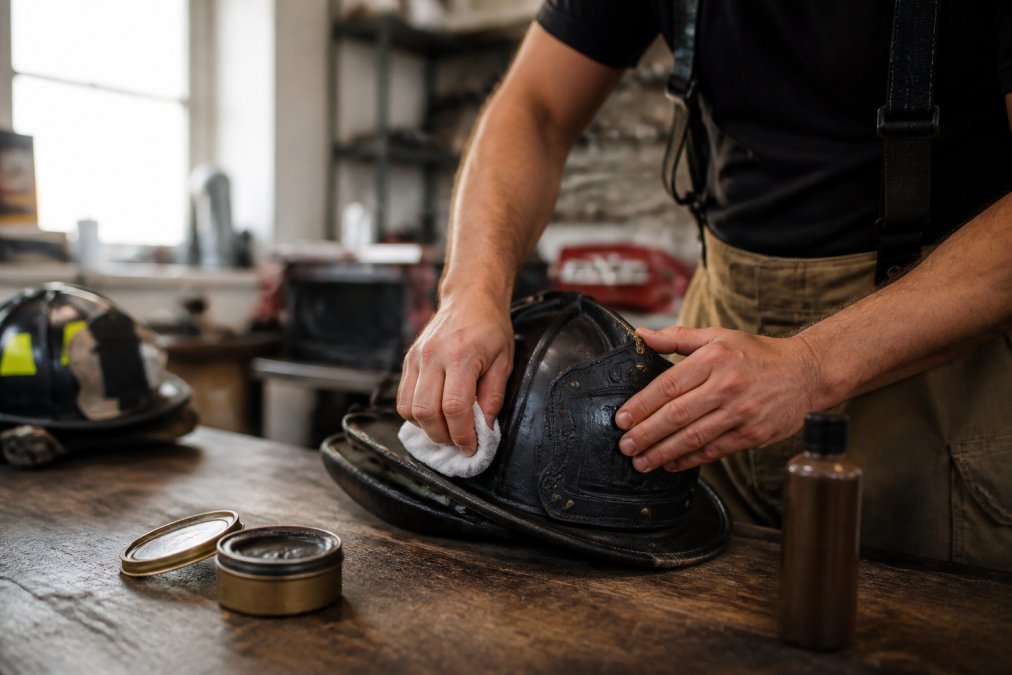
Fire helmet accessory maintenance tips separate firefighters who get years of value from their gear and those who don't. It's not complicated, but it does require consistency.
Start with conditioning. Quality leather needs conditioning every 6 to 12 months depending on your climate and how often you use your helmet. Dry climates and frequent exposure to heat accelerate drying. Humid climates slow it down. Use a leather conditioner designed for firefighting gear, not saddle soap, not generic leather cream. The right product penetrates, restores flexibility, and creates a protective barrier against moisture and UV damage.
Inspect your accessories monthly. Look for cracks in the leather, especially around rivets and seams. Check that rivets are still tight. A loose rivet can pop out during a call, and replacing it means downtime or temporary repairs. Catch it early, and a five-minute fix prevents a bigger problem.
Paint touch-ups matter more than most firefighters think. Your brass front holder or leather brim probably has painted details or trim. Paint protects the underlying material and maintains appearance. When paint chips, moisture gets underneath. A small chip becomes a larger problem. Touch up paint regularly. EH Coverings and other manufacturers offer paint that matches their designs.
Store your helmet properly when you're not wearing it. Don't leave it in direct sunlight or extreme heat. Don't store it in a damp environment. A cool, dry locker or shelf is ideal. Some firefighters use helmet bags for off-duty storage. That protects the finish and prevents accidental damage.
Clean your accessories regularly with mild soap and water. Dirt and salt accumulate on leather and brass. They accelerate deterioration. A quick wipe-down after a shift takes seconds and extends the life of your accessories significantly.
NFPA 1971 Helmet Accessory Compliance and Safety Standards
NFPA 1971 is the standard that governs firefighting protective equipment in the United States. It covers helmets, but what about the accessories you add to them?
The standard requires that any modification or accessory must not compromise the helmet's protective function. That means your brass front holder can't interfere with the helmet's structural integrity. Your leather brim can't shift the weight distribution in a way that affects how the helmet sits on your head. Your chin strap must function correctly and not create a strangulation hazard.
Most quality leather helmet accessories meet these requirements because they're designed by manufacturers who understand the standard. EH Coverings products are built with PPE compliance in mind. But not all accessories are created equal. Cheap knockoffs or poorly designed aftermarket parts might not meet NFPA 1971 requirements, which creates liability for you and your department.
Your department's equipment officer or safety officer should inspect any new accessories before you wear them on duty. They'll verify that the accessory doesn't create any safety issues and that it meets department policy. Some departments have strict rules about what modifications are allowed. Check your department's policy before ordering.
The compliance question matters most when you're considering aftermarket upgrades from sources other than established manufacturers. A random online seller's brass front holder might look good, but if it doesn't meet NFPA 1971 requirements or your department's standards, it's not worth the risk.
Comparing Leather Accessories to Synthetic Alternatives
The leather versus synthetic decision comes down to your priorities: durability and character versus convenience and low maintenance.
Leather accessories develop a patina over time. They darken, gain texture, and tell the story of your career. That's not just aesthetic. Many firefighters see it as part of their professional identity. Synthetic materials don't do that. They stay the same color and finish throughout their lifespan, which some firefighters prefer.
Synthetic alternatives are lighter, which matters if you're sensitive to neck strain or helmet weight. They're also more water-resistant out of the box and require minimal maintenance. Wipe them clean, and you're done. No conditioning, no paint touch-ups, no seasonal care.
The durability trade-off is real. Synthetic materials typically last 5 to 7 years before cracking and fading become noticeable. Quality leather lasts 20-plus years with proper care. If you're planning a 30-year career, that's a significant difference.
Cost is another factor. Synthetic accessories are often cheaper upfront, sometimes 30 to 40 percent less than leather alternatives. Over a 30-year career, that savings disappears when you factor in replacement cycles. You'll buy three or four synthetic accessories for every one leather accessory you maintain.
Synthetic also offers better performance in extreme weather. If your department operates in harsh climates with intense UV exposure or salt spray, synthetic might hold up better initially. Leather can handle it with proper conditioning, but it requires more attention.
The real comparison isn't leather versus synthetic. It's long-term investment versus short-term convenience. Neither is wrong. Your choice depends on whether you see your gear as something you maintain and carry throughout your career or something you replace periodically.
The Career Longevity Advantage
Here's what most guides miss about leather helmet accessories: they're not just about the helmet. They're about your career.
A firefighter with 25 years on the job has seen helmets change, standards evolve, and equipment come and go. The accessories that lasted through all of that? They're part of your professional story. They represent consistency, reliability, and the kind of gear you can trust when it matters.
Leather accessories support that career longevity because they're built to last and designed to adapt. A quality brass front holder from EH Coverings fits multiple helmet models. If you upgrade your helmet mid-career, your accessories come with you. That continuity matters more than you might think.
There's also a practical advantage to gear that ages well. Newer firefighters sometimes see worn leather and assume it's damaged or inferior. Experienced firefighters recognize it as a sign of durability and proper maintenance. Your gear tells people you know what you're doing.
The career longevity advantage isn't just about the accessories themselves. It's about the mindset they represent. Firefighters who invest in quality leather accessories tend to maintain all their gear better. They inspect their helmets more regularly, condition their leather, and replace components before they fail. That attention to detail carries over to every aspect of their job.
If you're planning a long career in the fire service, leather helmet accessories are worth the investment because they align with that commitment. They're gear built for people who plan to be around for a while.
Conclusion: Making Your Decision
Are leather helmet accessories worth it? The answer is yes, if you're willing to commit to maintenance and you prioritize durability over convenience.
The real cost of leather helmet accessories isn't just the purchase price. It's the time you invest in conditioning, inspecting, and maintaining them. It's the paint touch-ups and occasional repairs. It's the decision to treat your gear as an investment rather than a consumable.
For firefighters building a career in the fire service, that investment pays off. Quality leather accessories from EH Coverings deliver durability that matches your career span. Our brass front holders start at $45 for carved designs and $65 to $75 for customizable options. Our natural leather brims run $325 but are built to last decades with proper care. All of our accessories are designed to fit industry-standard helmets and built from American materials by American workers in an American factory.
The decision comes down to this: Do you see your gear as something you maintain and carry throughout your career, or something you replace periodically? If it's the former, leather is worth every dollar. If it's the latter, synthetic alternatives might serve you better.
Frequently Asked Questions
How long do quality leather helmet accessories typically last?
High-quality leather helmet accessories built with proper craftsmanship can last 15-20+ years with appropriate maintenance. American-made options like those designed to fit MSA, Cairns, and Morning Pride helmets often outlast synthetic alternatives because leather develops durability over time. Proper conditioning every 6-12 months and regular inspection significantly extend service life, making them reliable throughout a firefighter's career.
Do leather helmet accessories meet NFPA 1971 standards?
Yes, quality leather helmet accessories can meet NFPA 1971 helmet accessory compliance requirements when manufactured to specification. However, not all accessories automatically comply, verify that any custom leather fire helmet parts you purchase are designed with NFPA standards in mind. Reputable manufacturers clearly state compliance, and accessories should not compromise the helmet's structural integrity or protective capabilities.
Why do firefighters prefer leather accessories over synthetic options?
Firefighters choose leather accessories because they offer durability and aesthetic appeal that resonates with fire service culture. Leather develops character and patina over time, resists cracking better than synthetics in temperature extremes, and provides a classic look. American-made leather accessories also support domestic manufacturing and craftsmanship values important to career-focused firefighters.
Will aftermarket leather accessories fit my department-issued helmet without modifications?
Compatibility depends on your helmet model. Accessories designed for MSA, E.H. Coverings, Cairns 1010 & 1044, and Morning Pride Ben 2 helmets typically fit without modification. Before purchasing, confirm your helmet model and verify the accessory specifications. Quality manufacturers like EH Coverings design parts for exact fit, and custom options are available, ensuring professional appearance and department compliance.
If you're ready to invest in gear built for your entire career, EH Coverings offers custom leather helmet accessories designed specifically for professional firefighters. Our brass front holders and leather brims are engineered for compatibility with MSA, Cairns, Morning Pride, and EH Coverings helmets. Get started with EH Coverings and build a gear collection that lasts as long as your career.
This article was written using GrandRanker