

Table of Contents
- Understanding Brass Front Holder Compatibility for Cairns Helmets
- Material and Durability Considerations for Brass Holders
- How to Install Fire Helmet Front Holder: Step-by-Step
- Best Fire Helmet Front Holders: Design Variations and Customization
- Troubleshooting Common Compatibility Issues
- Maintenance and Cleaning Tips for Brass Front Holders
- Frequently Asked Questions
Last Updated: August 31, 2026
Understanding Brass Front Holder Compatibility for Cairns Helmets
A brass front holder that doesn't fit your Cairns helmet is a wasted purchase. At EH Coverings, we've worked with firefighters who've faced this exact problem: buying a holder only to discover it doesn't mount properly or requires unwanted shell modification.

Brass front holder compatibility for Cairns helmets follows predictable patterns once you understand what to look for. Most modern Cairns models, particularly the 1010 and 1044 series, have standardized mounting points designed for traditional leather helmet accessories. Understanding the differences between compatible options will save you time and money.
This guide walks you through everything you need to know about selecting, installing, and maintaining a brass front holder that actually fits your Cairns helmet without compromise.
What Makes a Front Holder Compatible
A compatible brass front holder must align with three critical factors: the helmet's shell design, the mounting hardware system, and weight distribution. Your Cairns helmet has specific rib spacing and shell curvature that determines which holders will sit flush against the leather.
The mounting system is where most compatibility issues surface. Traditional Cairns helmets use rivets or set screws to secure front holders to the leather shell. If a holder is designed for a different helmet model, the hole spacing might be slightly different, forcing you to drill new holes or use adapters. Improper mounting can compromise the structural integrity of your helmet over time.
EH Coverings designs brass holders specifically engineered for Cairns 1010 and 1044 models, with mounting holes that align perfectly with factory specifications. You won't need to modify your helmet shell, and the holder sits at the correct angle for that classic, professional appearance.
Cairns Helmet Models and Brass Holder Fit
Not all Cairns helmets accept the same brass front holder. The company has produced several generations with meaningful differences.
The Cairns 1010 is one of the most popular models in active service. Its leather shell and traditional rib design accommodate standard brass holders without modification. Most quality brass holders will fit with minimal fuss.
The Cairns 1044 maintains compatibility with traditional brass holders. Designed with the same mounting philosophy as the 1010, holders engineered for one typically work for the other. Always verify the specific model before ordering.
Older Cairns models, particularly vintage leather helmets from decades past, may have different shell geometries. If you're working with a helmet that's 20+ years old, take measurements of the mounting area and contact the manufacturer before committing to a purchase.
Material and Durability Considerations for Brass Holders
The material your brass holder is made from directly impacts how long it will last and how it performs in high-heat environments.
Cast Brass vs. Powder-Coated Options
Cast brass is the traditional choice for fire helmet front holders. The metal is poured into a mold and allowed to cool, creating a solid piece that can withstand impact and thermal stress. Cast brass offers authentic weight and presence. The surface can be polished to a bright finish or left with a natural patina that develops over years of use.
Powder-coated brass is a modern variation where a protective coating is applied to the cast brass surface. The coating protects against oxidation and maintains a consistent finish longer than bare brass. Black powder-coated options have become popular because they're easier to maintain and photograph well in department photos.
The trade-off is subtle. Powder-coated holders require less maintenance, but the coating can chip if struck hard enough. A bare brass holder, once damaged, can be re-polished. For career firefighters, the choice comes down to whether you prefer low-maintenance performance or the traditional aesthetic you can restore yourself.
EH Coverings offers both options: the All American Brass Front Holder in traditional polished brass, and the Black All American Brass with modern, low-maintenance finish. Both are made from American material by American workers, designed to fit Cairns 1010 and 1044 helmets without modification.

Thermal Stability and High-Heat Performance
Brass is an alloy of copper and zinc that performs remarkably well in high-heat environments (nist.gov). The metal doesn't warp significantly under extreme temperature, which is essential for a front holder exposed to radiant heat during structural fires.
The real concern isn't the brass itself, it's the mounting system. If your holder is secured with low-quality rivets or screws, those fasteners can loosen under thermal stress. A holder properly installed with quality hardware will maintain its position even after repeated exposure to intense heat.
A well-installed brass holder actually protects the leather beneath it by providing some thermal shielding. This is another reason why proper installation matters.
How to Install Fire Helmet Front Holder: Step-by-Step
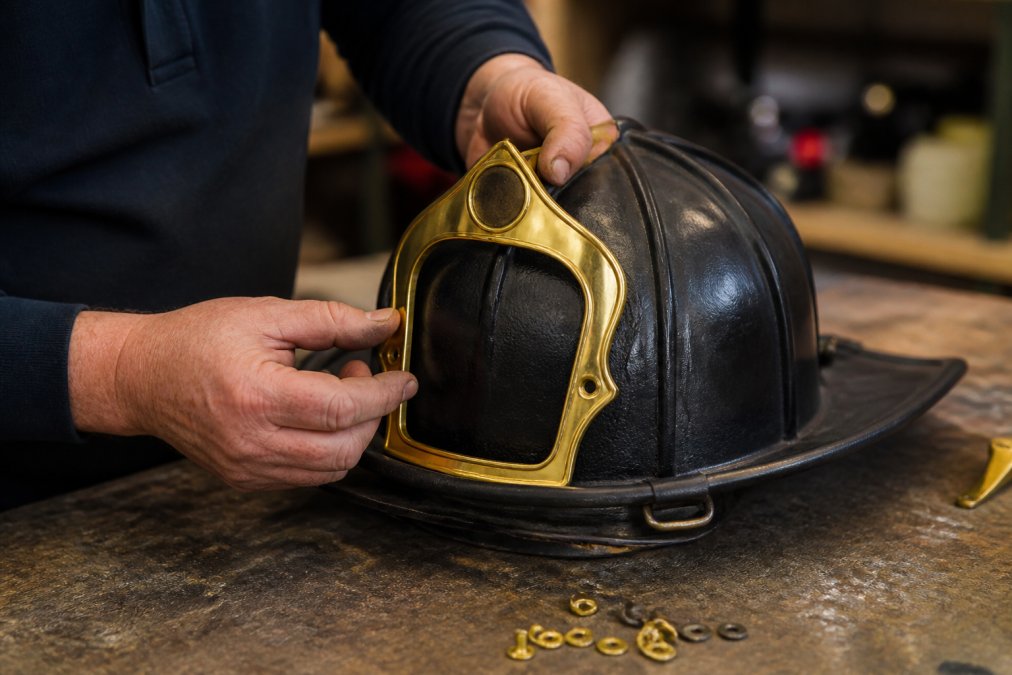
Installing a brass front holder correctly takes about 15-20 minutes and requires only basic tools (nfpa.org). Precision matters. A holder installed properly will last decades.
What You'll Need Before Starting
Gather these items before you begin:
- Your brass front holder (compatible with your Cairns model)
- Rivets or set screws (typically provided with the holder)
- A rivet gun or screwdriver
- A drill with appropriate bit size (if you need to enlarge existing holes)
- A ruler or measuring tape
- Protective gloves
- A clean work surface
Most quality brass holders come with all fastening hardware included. Use hardware that matches the original specifications. Cheap fasteners fail under stress.
Installation and Hardware Requirements
Position the holder against your helmet, aligned with the center of the shell and sitting flush against the leather. The holder should be perfectly centered; off-center installation looks unprofessional and creates uneven stress on the mounting points.
Mark the mounting holes lightly with a pencil. Step back and look at the positioning from multiple angles. If something feels off, adjust now rather than after you've installed fasteners.
Verify that existing mounting holes align with your new holder. If the holes are slightly misaligned, you can use the existing holes if the misalignment is minimal, or drill new holes for a more professional approach.
Mounting Hardware and Set Screws
The fastening method depends on your holder design. Most traditional brass holders use either rivets or set screws.
Rivets are permanent fasteners that create an extremely strong connection. A rivet gun applies pressure that deforms the rivet, locking it in place. The result is rock-solid and ideal for gear you want to last a career.
Set screws offer removability. If you ever need to replace the holder, set screws let you do that without damaging your helmet shell. They require periodic checking to ensure they haven't loosened from vibration or impact.

For Cairns helmets, rivets are the traditional choice and deliver superior durability. Install them one at a time, checking alignment after each one. If using set screws, apply a small amount of threadlocker compound to prevent vibration from loosening them. Tighten firmly but don't over-torque.
Once all fasteners are installed, gently test the holder by applying moderate pressure from different angles. It should not move at all.
Best Fire Helmet Front Holders: Design Variations and Customization
Brass front holders come in several classic designs, each with its own aesthetic and historical significance.
Maltese Cross, Eagle Top, and Traditional Designs
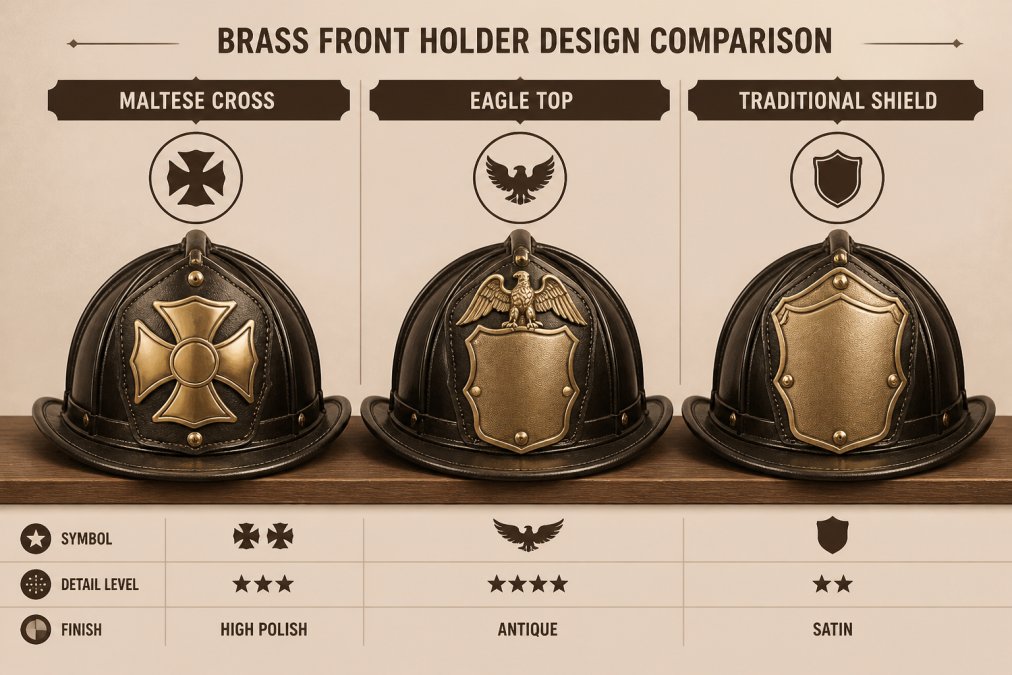
The Maltese cross is perhaps the most iconic fire service symbol. A brass Maltese cross front holder carries deep historical meaning, representing the courage and sacrifice of firefighting. Many departments have a tradition of Maltese cross holders on their helmets.
The eagle top design features an eagle perched at the apex of the holder. This design dates back to military traditions and represents vigilance and protection. Eagle top holders are less common but remain popular among firefighters who value historical authenticity.
Traditional shield designs offer a more understated appearance, focusing attention on department insignia or numbers rather than elaborate decorative elements. This design works well for departments with strict uniform policies or firefighters who prefer a minimalist aesthetic.
Each design serves the same functional purpose, but the visual impact varies significantly. Your choice should align with your department's tradition and your personal preference.
Customization and Aesthetic Options
Polished brass develops a warm, golden appearance that many firefighters love. Over time, exposed brass develops a natural patina that tells the story of years in service. Some firefighters polish their brass regularly to maintain that bright finish. Others embrace the patina as a badge of experience.
Black powder-coated finishes offer a modern alternative. The matte or gloss black coating provides a sleek, contemporary look while requiring minimal maintenance.
EH Coverings offers customizable options that let you choose both the design and the finish that matches your personal style and department requirements. Department insignia, badge numbers, and personal touches can be added through engraving or etching.
Troubleshooting Common Compatibility Issues
Even with careful selection, compatibility problems sometimes surface. Knowing how to diagnose and solve them prevents frustration.
Beak Cracking and Shell Modification Concerns
The "beak" is the front edge of your helmet shell where the leather curves around the bill. Repeated stress can cause the leather to crack at this junction. A small crack is cosmetic. A large one compromises structural integrity.
Beak cracking usually indicates the holder is mounted at an incorrect angle or the mounting holes were drilled in a location that creates a stress concentration point. If you notice cracks developing after installation, remove the holder immediately and inspect the mounting area.
The solution might be as simple as reinstalling the holder with better alignment. Conditioning the leather before mounting a holder ensures the shell has maximum flexibility to accommodate the fasteners.
Shell modification should only happen when absolutely necessary. A quality brass holder designed for your specific helmet model should fit without modification.
Weight and Balance Impact on Your Helmet
A brass front holder adds weight to the front of your helmet, shifting the center of balance slightly forward. For most firefighters, this is barely noticeable. The holder typically weighs between 3-6 ounces.
The real concern is uneven weight distribution. If your holder is mounted off-center, you'll feel the imbalance. Centered mounting ensures even weight distribution and eliminates discomfort.
If you're experiencing neck strain or headaches after adding a front holder, verify that it's mounted perfectly centered.
Maintenance and Cleaning Tips for Brass Front Holders
A brass front holder requires minimal maintenance, but the right care keeps it looking sharp and performing reliably throughout your career.
For polished brass holders, clean regularly with a soft cloth and warm soapy water. Once or twice a year, apply a brass polish to restore shine. Black powder-coated holders need even less maintenance. Wipe them down with a damp cloth occasionally and let them air dry.
Check your mounting fasteners annually. Rivets don't loosen, but set screws can work loose from vibration. A quick tightening keeps everything solid.
Store your helmet in a cool, dry place when not in service. Never use abrasive cleaners or steel wool on brass. Your brass holder will develop character over years of use. That's part of its appeal.
Investing in the right brass front holder means choosing gear that fits your Cairns helmet without compromise, matches your department's standards, and will outlast your career.
EH Coverings has engineered brass front holders specifically for Cairns helmets, designed to fit the 1010 and 1044 models without modification. Our All American Brass Front Holder, available in polished brass or black powder-coated finishes, combines traditional craftsmanship with modern reliability. Made from American material by American workers, each holder is built to deliver the durability you need when you need it most. Learn more about our brass front holder options and find the design that matches your style and department requirements.
Frequently Asked Questions
How do I determine if a brass front holder fits my specific Cairns helmet model?
Check your helmet's model number, typically found on the inside or back of the shell. Cairns 1010 and 1044 models are compatible with most standard brass front holders. The key is matching the helmet's rib structure and shell diameter. Before purchasing, verify the holder is designed for traditional leather helmets in your size range. EH Coverings' brass front holders are specifically engineered for Cairns 1010 and 1044 compatibility, ensuring a secure fit without shell modification.
Are brass front holders compatible across all Cairns traditional helmet series?
Not all Cairns models accept the same brass front holder. Traditional Cairns leather helmets like the 1010 and 1044 work with standard brass holders, but newer composite models may have different mounting points. Always cross-reference your specific helmet model with the holder's compatibility list before ordering. Cairns helmets designed for leather front pieces typically accept brass holders, while those designed for other mounting systems may require adapters or modifications.
What tools and hardware do I need to install a brass front holder on my Cairns helmet?
Most installations require a rivet gun, small hammer, and a drill or punch tool to create or align mounting holes. Your brass front holder should include mounting rivets and hardware. Check whether your holder comes with set screws or requires rivets for permanent attachment. If you're uncomfortable using power tools near your helmet shell, consider having a professional installer handle the work to avoid cracking the leather or composite material.
Can brass front holders withstand high-heat environments without damage or discoloration?
Quality cast brass holders are thermally stable and designed to withstand the heat exposure common in firefighting. Polished brass may develop a patina over time, while powder-coated finishes (like matte or gloss black) resist oxidation better. The holder itself won't warp or lose structural integrity in high-heat scenarios. Regular cleaning and appropriate finish selection help maintain appearance. EH Coverings' American-made brass holders are built specifically for the thermal demands of active firefighting.
This article was written using GrandRanker