

Table of Contents
- Understanding Custom Leather Helmet Gear Durability
- Material Composition and Impact Resistance
- NFPA 1971 Helmet Standards and Rated Impact Performance
- Standardized Durability Testing Methodology
- Fire Helmet Gear Maintenance Tips for Long-Term Performance
- How to Restore Old Fire Helmets and Custom Accessories
- Cost-Benefit Analysis of Custom Leather Gear Investment
- Frequently Asked Questions
Last Updated: September 2, 2026
Understanding Custom Leather Helmet Gear Durability
Custom leather helmet gear represents one of the most critical investments a firefighter can make. Properly constructed leather accessories withstand decades of active duty when designed and tested correctly. The durability of your helmet gear directly impacts your safety on the fireground, making understanding how to evaluate and maintain these pieces essential.
At EH Coverings, we've spent years perfecting American-made fire helmet accessories. Our approach centers on one principle: gear that lasts your entire career. When you're facing thermal extremes, impact forces, and constant wear, the difference between a helmet component that fails and one that holds up can be measured in seconds. Understanding the testing standards and real-world performance metrics gives you the confidence to make the right choice.
Material Composition and Impact Resistance
Vegetable-Tanned Leather vs. Composite Materials
Vegetable-tanned leather has been the gold standard for fire helmet gear for over a century. This traditional leather undergoes a tanning process using natural tannins from tree bark, creating a material that becomes harder and more resilient with age and use. Unlike chrome-tanned leather, vegetable-tanned leather develops a protective patina and maintains structural integrity even after prolonged heat exposure.
The key advantage lies in how vegetable-tanned leather responds to impact. When struck, this material absorbs force through its dense fiber structure rather than deforming permanently. A leather brim or front holder made from quality vegetable-tanned stock will show wear, but it won't lose its protective shape.

Composite materials, fiberglass, carbon fiber, and thermoplastic blends offer different trade-offs. They're lighter and cheaper to produce, but can become brittle under sustained heat exposure and may lose impact absorption capability faster than leather. For custom gear where you're paying a premium for personalization and heritage aesthetics, composites rarely justify the cost since they lack the longevity advantage.
The real distinction: vegetable-tanned leather improves with proper care, while composites degrade over time.
Thermal Degradation and Heat Exposure
Fire helmet gear faces temperatures that would destroy most materials. Vegetable-tanned leather has a thermal stability advantage because the tanning process creates cross-links between fibers that resist breakdown. When exposed to high heat, the leather may darken and become slightly more brittle, but it maintains structural integrity. Vintage leather helmets from the 1960s and 1970s still function today after decades of fireground exposure.
Composite materials face a different challenge. Many thermoplastic compounds soften at temperatures above 200°F (peer-reviewed research). While modern fire-rated composites are engineered to resist this, they still experience molecular degradation faster than leather.
NFPA 1971 Helmet Standards and Rated Impact Performance
NFPA 1971 is the national standard that governs helmet design, testing, and performance requirements for structural firefighting (nfpa.org). The standard establishes minimum impact resistance thresholds and addresses thermal protection, electrical resistance, and visibility requirements. However, meeting NFPA 1971 is a baseline. A helmet that passes certification may still degrade significantly over years of active use.
Custom leather components from a reputable maker like EH Coverings are designed to maintain their protective properties well beyond the initial certification window. A brass front holder that's corroded or a seam band that's deteriorated changes how force is distributed during impact. Maintaining your custom gear isn't cosmetic, it's a safety requirement.

Standardized Durability Testing Methodology
Durability testing separates custom leather helmet gear from hype. Real testing answers a simple question: how does this material perform after repeated stress cycles that simulate actual fireground use?
The most relevant tests for leather helmet gear include:
-
Flexural fatigue testing: Measures how many bend cycles a material can withstand before cracking or failing. Quality vegetable-tanned leather should handle thousands of flex cycles without permanent damage.
-
Thermal cycling: Simulates repeated heat exposure and cooling. Material is heated to fireground-relevant temperatures, then cooled, then reheated. Leather that maintains flexibility and strength through 50+ thermal cycles is performing well.
-
Impact resistance after aging: Tests impact performance on material that's been artificially aged to simulate years of fireground use.
-
Moisture resistance and dimensional stability: Verifies that leather maintains its shape and protective properties after water exposure and drying cycles.
-
Abrasion resistance: Measures how quickly a material wears under friction. Material that resists abrasion maintains its protective properties longer.
Impact Absorption and Structural Integrity Testing
Impact absorption is the capacity of a material to dissipate force without transferring it directly to your head. Quality vegetable-tanned leather excels at this compared to many alternatives.
When struck, quality leather absorbs energy through fiber deformation and friction within the material structure. The denser the leather, the better this absorption. Structural integrity testing verifies that a component maintains its original shape and protective geometry after impact. A brass front holder that bends permanently after impact has failed its core function. Quality brass, especially when properly tempered, maintains its shape while absorbing the force that would otherwise reach the helmet shell.
Real-World Wear and Tear Case Studies
Firefighters who've maintained their gear properly report that quality leather accessories last 15-20+ years of active duty (the CDC). After five years of regular use, the leather shows patina and brass develops natural oxidation. With basic maintenance, this gear continues protecting and performing for another 10-15 years.
Lower-quality leather or composite alternatives may be cracking after five years, with replacement becoming necessary. The real cost difference between buying quality once and replacing inferior gear multiple times becomes obvious. The key factor in all successful long-term use: preventative maintenance.
Fire Helmet Gear Maintenance Tips for Long-Term Performance
Durability is created through consistent care. The difference between a leather helmet component that lasts 20 years and one that fails in five is often just maintenance discipline.
Preventative Care and Inspection Protocols
Examine your custom leather gear monthly for signs of damage, wear, or degradation. Look for cracks or splits in the leather, loose or corroded hardware, moisture damage, and separation where components are glued or stitched together.
Preventative care means addressing small issues before they become major problems. A loose rivet should be replaced immediately. A small crack in leather should be treated before it spreads.
Cleaning is straightforward but essential. Use a soft brush to remove dust and debris. For brass hardware, a gentle wipe with a soft cloth maintains appearance and prevents corrosion buildup. Conditioning leather extends its life significantly. Quality leather conditioner, applied every six months to a year, keeps the material supple and resistant to cracking.
DIY Maintenance vs. Professional Refurbishment
Many firefighters handle basic maintenance themselves: cleaning, conditioning, minor repairs. You can replace suspension tabs or install new chin strap clips without professional help if you're comfortable with basic hardware installation.
However, some repairs require professional expertise. If your leather brim needs significant restoration, seam work, or structural repair, that's when you should consider professional refurbishment. A skilled craftsperson can restore a vintage helmet or repair damage in ways that DIY approaches can't match.
For custom brass seam bands that need replacement, EH Coverings offers quality American-made options ($23 per set) that fit standard helmets. Installing these yourself takes basic tools and minimal time.

How to Restore Old Fire Helmets and Custom Accessories
Replacing Worn Components: Brass Hardware and Seam Bands
The most common restoration task is replacing worn brass hardware and seam bands. Start by carefully removing the old hardware. If rivets are holding seam bands in place, you'll need to drill them out carefully without damaging the leather underneath.
Installing new brass seam bands is straightforward if you have the right tools. You'll need a rivet gun, new rivets, and the replacement seam bands. EH Coverings brass seam bands ($23 per set of four) are manufactured to fit standard leather helmets. Position the new bands where the old ones were, align them carefully, and install rivets through the pre-drilled holes.
For brass front holders, the process is similar. If your helmet has a wooden front holder that's rotted or damaged, removal and installation follow the same basic steps. EH Coverings carved front holders ($45) offer heritage-appropriate designs that enhance both protection and appearance.
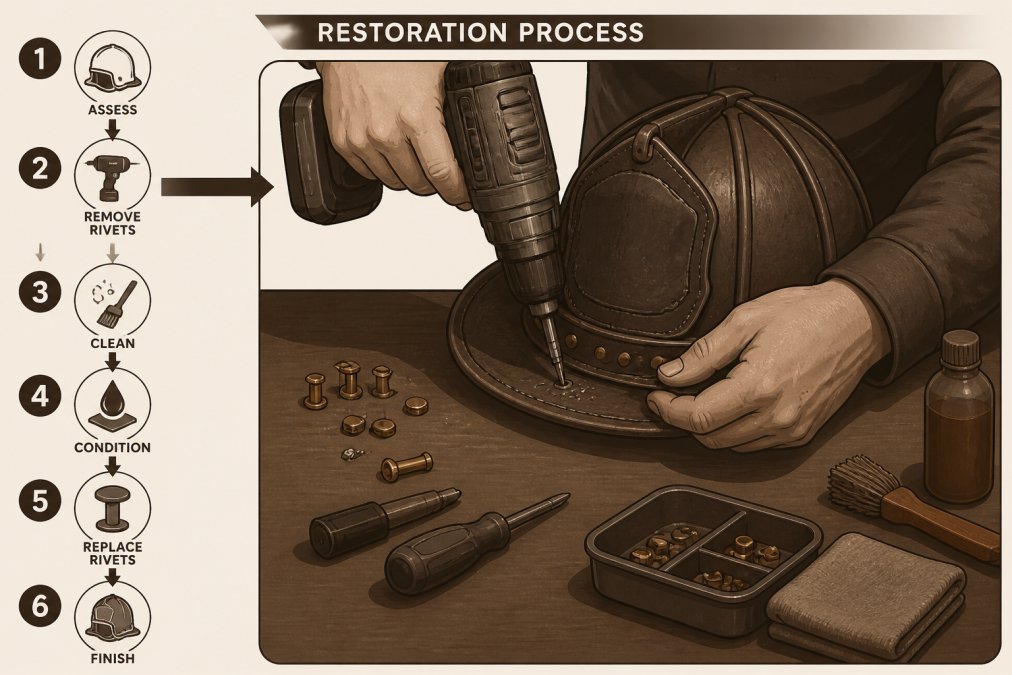
The key to successful hardware replacement: take your time, use quality replacement components, and ensure everything is secure before returning the helmet to service.
Customization Options and Aesthetic Upgrades
Beyond basic restoration, customization allows you to personalize your helmet while maintaining durability standards. Custom leather brims with scroll work represent the highest level of personalization. A natural leather brim ($325) hand-crafted from American leather with reinforced shaping wire maintains its form and protects your face while expressing individual style.
For firefighters on a tighter budget, blemished leather brims ($150) offer the same durability and functionality with minor cosmetic imperfections. These perform identically to premium brims and age beautifully.
Carved brass front holders let you display heritage, geographical pride, or personal symbolism. Customization doesn't compromise durability when done correctly, it enhances it.
Cost-Benefit Analysis of Custom Leather Gear Investment
Custom leather helmet gear costs more than mass-produced alternatives. A quality custom leather brim from EH Coverings costs $325. Comparable brass seam bands are $23 per set. Carved front holders run $45.
But compare the total cost of ownership over your career. If you purchase a quality custom brim at the start of your career and maintain it properly, that single piece lasts 20+ years. The cost per year is roughly $16. If you replace inferior gear every 5-7 years, you're buying multiple times over and spending more total despite the lower per-unit cost.
Custom gear from makers like EH Coverings is designed and tested to perform under fireground stress. That reliability has value that extends beyond the purchase price. Gear that looks professional and fits your helmet properly enhances your appearance on the job.
The financial calculation is straightforward: buy quality once, maintain it properly, and you're ahead of the cost curve compared to replacing inferior gear repeatedly.
Custom leather helmet gear durability is determined by material selection, proper testing, and consistent maintenance. When you invest in quality American-made gear from EH Coverings, whether that's brass seam bands, custom leather brims, or carved front holders, you're investing in equipment designed to protect you and last your entire career. Start with a foundation of quality materials, understand how they perform under real-world stress, and maintain them properly. That combination ensures your gear performs when it matters most. Get started with EH Coverings and build a custom helmet setup that reflects your commitment to durability and professional pride.
Frequently Asked Questions
Do leather fire helmets meet current NFPA impact standards?
Yes, custom leather helmet gear can meet NFPA 1971 standards when constructed with proper shell materials and impact-absorbing components. Quality vegetable-tanned leather combined with reinforced brass hardware and appropriate liner systems provides the structural integrity and rated impact resistance required by safety standards. However, the helmet's overall compliance depends on all components working together, not leather alone.
How do you maintain custom leather helmet accessories?
Fire helmet gear maintenance tips include regular inspections for moisture damage, cracks, and loose rivets. Clean leather surfaces gently with a soft cloth and mild soap, then air dry completely. Store in a cool, dry location away from direct sunlight to prevent thermal degradation. Check brass seam bands and front holders quarterly for corrosion. Replace worn suspension tabs and frayed chin straps promptly to maintain helmet integrity and safety compliance.
Are leather helmet fronts and accessories durable enough for daily fireground use?
Quality leather helmet gear withstands years of daily use when properly maintained. Vegetable-tanned leather resists heat exposure and maintains tensile strength under fireground conditions. Brass hardware provides long-term corrosion resistance. Real-world case studies show well-maintained custom leather accessories lasting throughout a firefighter's entire career. The key is preventative care and timely replacement of worn components like seam bands and suspension tabs.
What's the difference between DIY maintenance and professional refurbishment for leather helmets?
DIY maintenance includes regular cleaning, inspection, and replacing basic components like suspension tabs ($20) or brass hardware ($6). Professional refurbishment involves complete restoration of structural integrity, including re-stitching, leather conditioning, and comprehensive durability testing. For helmets showing significant wear, professional refurbishment ensures PPE compliance and safety standards are met. DIY works for preventative care; professional services restore compromised protective equipment.
This article was written using GrandRanker