

Table of Contents
- What Makes Premium Brass Fire Helmet Hardware Worth the Investment
- Fire Helmet Front Holder Replacement: When and Why
- How to Install Fire Helmet Hardware: Step-by-Step
- Compatibility by Helmet Brand and Model
- Material Durability, Heat Resistance, and Long-Term Care
- NFPA Compliance and Safety Standards
- Selecting the Right Brass Hardware for Your Needs
- Frequently Asked Questions
Last Updated: October 2, 2026
What Makes Premium Brass Fire Helmet Hardware Worth the Investment
Premium brass fire helmet hardware isn't just about looks, it's about durability, safety compliance, and equipment that actually lasts your entire career. When you're working in extreme heat and harsh conditions, the quality of your gear matters. At EH Coverings, we've built our reputation on providing brass fire helmet hardware that withstands decades of use without compromising structural integrity or appearance.

The difference between standard hardware and premium brass comes down to material composition, manufacturing precision, and heat resistance. Solid brass resists corrosion far better than cheaper alternatives, maintains its strength under extreme temperatures, and won't degrade when exposed to the repeated stress of daily wear.
Here's what separates investment-grade hardware from the rest: superior craftsmanship, compatibility with industry-standard helmets, and hardware that's actually built to last. The All American Brass Front Holder from EH Coverings, for example, starts at $65.00 and fits MSA, E.H.
Fire Helmet Front Holder Replacement: When and Why
Your front holder takes a beating. Heat, moisture, impact, and daily handling all wear on the mounting hardware and the holder itself. Knowing when to replace it, and why, keeps your helmet functional and safe.
You'll notice it's time for replacement when the brass shows deep pitting or corrosion that polishing won't fix, when rivets loosen or fall out, or when the holder itself bends or cracks.
The most common reason for replacement is rivet failure. Rivets corrode, loosen, or shear under stress.
Compatibility matters more than you'd think. An older Cairns helmet won't accept the same mounting hardware as a newer MSA composite shell. Before ordering a replacement, verify your helmet model. If you've got a Cairns helmet that's pretty old, EH Coverings' brass front holders are specifically designed to fit Cairns 1010 & 1044 models without modification. That eliminates the guesswork and the risk of ordering something that doesn't fit.

How to Install Fire Helmet Hardware: Step-by-Step
Installing brass fire helmet hardware correctly ensures it stays secure and looks professional. The process isn't complicated, but it does require the right tools and attention to detail.
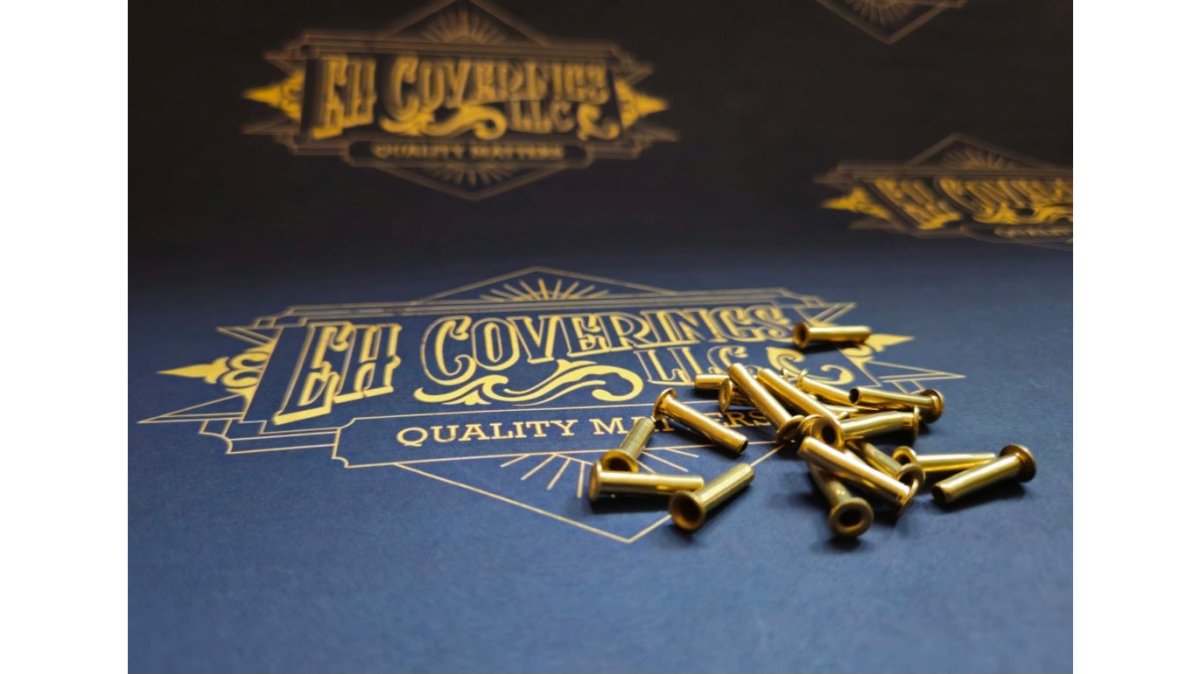
Tools and Materials You'll Need
- Brass front holder or replacement hardware
- Rivets (typically 3 per holder; EH Coverings includes these with most front holders)
- Rivet gun or hand rivet tool
- Drill with appropriate bit size (usually 3/32" for standard rivets)
- Measuring tape or ruler
- Marker or pencil for marking hole locations
- Safety glasses
- Work gloves
Installation Process
Start by positioning your front holder on the helmet.
Drill pilot holes through the marked locations. Use a bit size that matches your rivets (standard fire helmet rivets typically use 3/32" holes).
Insert the rivet through the front holder and the helmet shell. Position the rivet gun squarely on the rivet head and apply firm, steady pressure.
Check each rivet for tightness after installation. A properly set rivet won't spin or move.
Common Installation Mistakes to Avoid
Drilling holes too large is the most frequent error. Oversized holes mean the rivet can't set properly, leaving your holder loose and unstable.
Positioning the holder off-center or at an angle looks unprofessional and can cause uneven stress on the mounting points.
Applying inconsistent pressure with the rivet gun prevents the rivet from setting fully. Use steady, firm pressure and complete the full compression cycle.
Installing hardware on a dirty or damaged helmet shell reduces the connection strength.
Compatibility by Helmet Brand and Model
Not all brass fire helmet hardware fits all helmets. Mounting systems vary significantly across manufacturers, and installing incompatible hardware wastes money and creates safety issues.
EH Coverings brass front holders are engineered to fit specific helmet models. The All American Brass Front Holder and Black All American Brass options both fit MSA and E.H. Coverings style leather helmets, the TL2, Cairns 1010 & 1044, and Morning Pride Ben 2. That compatibility covers most career firefighters' equipment, but it's essential to verify before ordering.

Older helmets sometimes use different mounting systems entirely. If you're restoring a vintage helmet or converting an older model, compatibility becomes even more critical. The d-ring and hairpin suspension systems differ between eras.
| Helmet Brand/Model | Compatible EH Coverings Hardware | Notes |
|---|---|---|
| MSA | All American Brass Front Holder, Black All American Brass | Standard mounting pattern |
| E.H. Coverings Leather | All American Brass Front Holder, Black All American Brass | Designed specifically for this shell |
| Cairns 1010 & 1044 | All American Brass Front Holder, Black All American Brass | Fits without modification |
| Morning Pride Ben 2 | All American Brass Front Holder, Black All American Brass | Compatible mounting system |
| TL2 | All American Brass Front Holder, Black All American Brass | Modern composite shell |
If your department issues you a standard helmet and you're strict about what modifications pass inspection, verify that brass hardware won't be flagged as unprofessional.
Material Durability, Heat Resistance, and Long-Term Care
Brass's reputation for durability isn't hype, it's chemistry. Solid brass resists corrosion better than steel or aluminum, maintains its strength at high temperatures, and won't become brittle or fail under thermal stress.
Heat resistance is critical. Your helmet sits in extreme temperatures, direct flame exposure, radiant heat from structure fires, and sustained high-temperature environments.
The durability difference shows over time. A quality brass front holder from EH Coverings is built to last till the end of your career.
Corrosion Prevention and Maintenance
Corrosion is the enemy of long-term durability. Even brass corrodes in harsh environments, but proper maintenance prevents it from becoming a problem.
Clean your brass hardware regularly with a soft cloth and mild soap. Remove sweat, salt residue, and environmental contaminants that accelerate corrosion.
Polishing keeps brass looking sharp and creates a protective patina. A quality brass polish applied every few months removes light oxidation and restores shine.
Store your helmet in a dry environment when off-duty. Moisture accelerates corrosion, especially in humid climates or near salt water.
NFPA Compliance and Safety Standards
Fire service equipment operates under strict safety standards. The National Fire Protection Association (NFPA) sets requirements for protective equipment, including helmet construction and hardware durability.
NFPA 1971 Standard on Protective Ensembles for Structural Fire Fighting and Proximity Fire Fighting establishes performance requirements for helmets and their components. The standard covers impact resistance, heat resistance, and material durability, all areas where quality brass hardware makes a measurable difference.
Hardware must withstand impact, maintain structural integrity under heat exposure, and not degrade or fail under normal use conditions. Solid brass meets and exceeds these requirements.
Your department likely has its own equipment standards that reference NFPA guidelines. Before installing custom hardware, verify that it complies with both NFPA standards and your department's specific requirements.
Selecting the Right Brass Hardware for Your Needs
Start with your helmet. Verify the exact model and manufacturing year if possible. Older helmets require different hardware than modern composite shells. Once you know what you're working with, match it to compatible EH Coverings products. The All American Brass Front Holder ($65.00) and Black All American Brass ($65.00) cover most standard applications. If you want customization, department logos, specific finishes, or unique designs, the Customizable All American Brass ($75.00) offers that flexibility, though orders take up to 6 weeks.
Budget considerations matter, but they shouldn't drive you toward cheap alternatives. A quality brass front holder costs between $50 and $85 depending on finish and customization.
If you're restoring an older helmet or converting a vintage model, you might need specialty hardware.
Consider also whether you need replacement rivets or complete hardware kits.
Selecting premium brass fire helmet hardware is an investment in equipment that performs when it matters most.
Frequently Asked Questions
Why do firefighters use brass hardware on their helmets?
Brass hardware provides superior durability and heat resistance compared to plastic components. The solid brass construction withstands the extreme temperatures and harsh conditions firefighters face on the job. Brass also resists corrosion better than other metals, ensuring your helmet hardware maintains structural integrity and appearance throughout your career. Additionally, brass finials and front holders offer a professional, traditional appearance that many fire service personnel prefer.
Can I install brass fire helmet hardware myself, or do I need professional help?
You can install brass fire helmet hardware yourself with basic tools and proper technique. Most installations require a rivet gun, mounting screws, and the replacement hardware kit. The key is ensuring rivets are placed correctly to maintain the helmet shell's structural integrity. However, if you're uncertain about the process or your department has strict modification policies, consult with a supervisor or experienced technician first to avoid damage to your protective equipment.
How do I know if premium brass hardware will fit my helmet model?
Premium brass fire helmet hardware compatibility varies by helmet brand and model. Most quality brass front holders are designed to fit MSA, E.H. Coverings, Cairns 1010 & 1044, and Morning Pride Ben 2 helmets. Before purchasing, verify your helmet's specific model number and compare it against the product specifications. If you have an older or specialty helmet, contact the manufacturer to confirm compatibility before installation to avoid ordering hardware that requires modification.
What's the difference between polished and blacked-out brass hardware?
Polished brass maintains a bright, traditional appearance that requires regular maintenance to prevent tarnishing. Blacked-out brass (available in matte or gloss finishes) offers a modern look with reduced maintenance needs. Both options provide the same heat resistance and durability. Your choice depends on personal preference and your department's appearance standards. Some departments prefer the classic polished look, while others favor the contemporary blacked-out finish that hides minor wear and corrosion.