

Table of Contents
- Why American Made Brass Gear Matters for Firefighters
- Best Fire Helmet Front Holders: A Quick Comparison
- Top High Quality American Made Brass Front Holders
- Fire Helmet Hardware Maintenance: Rivets, Seam Bands, and Crowns
- How to Polish Fire Helmet Brass Without Damaging the Finish
- Brass vs. Alternative Materials: Durability and Sustainability
- Frequently Asked Questions
Last Updated: September 11, 2026
Why American Made Brass Gear Matters for Firefighters
A fire helmet is a career-long companion that carries your department's identity, your rank, and the history of every call you have answered. Choosing a high quality american made brass gear setup is one of the most personal decisions you will make. At EH Coverings, we build brass front holders and helmet hardware from All American material, produced by American workers in an American factory.
Domestic sourcing goes beyond sentiment: American manufacturing means tighter oversight of material quality, shorter supply chains, and accountability overseas production often cannot match. A brass front holder must hold its shape, resist corrosion, and survive decades of heat, smoke, and impact.

Material Quality and Domestic Sourcing
American made brass hardware is typically produced from alloys chosen for corrosion resistance and machinability rather than lowest cost, a distinction that matters where hardware faces moisture, temperature swings, and constant handling.
Domestic sourcing also keeps replacement parts available: a front holder that fits today should still be replaceable in ten years, along with the rivets, seam bands, and crowns that hold a leather helmet together.
Best Fire Helmet Front Holders: A Quick Comparison
The table below summarizes the front holders in this guide so you can match a style to your helmet and budget.
| Front Holder | Price | Finish Options | Best For |
|---|---|---|---|
| All American Brass Front Holder | $65.00 | Classic brass | Traditional leather helmets |
| Black All American Brass | $65.00 | Matte or gloss black | Low-glare duty use |
| Customizable All American Brass | $75.00 | Brass, matte or gloss black | Department or personal customization |
| DCFD All American Brass | $50.00 | Matte, gloss black, brass | Budget-conscious buyers |
| PGFD IAFF Local 1619 Black | $65.00 | Matte or gloss black | Local union identity |
| San Francisco FD Brass Front Holder | $85.00 | Brushed or polished | Department-specific display |
Every holder in this list is designed to fit MSA and E.H. Coverings style leather helmets as well as the TL2, with several models also fitting Cairns 1010 and 1044 and Morning Pride Ben 2 helmets.

Top High Quality American Made Brass Front Holders
Each front holder below is built to the same core standard: American material, American labor, and a career-long fit. What separates them is finish, price, and customization.
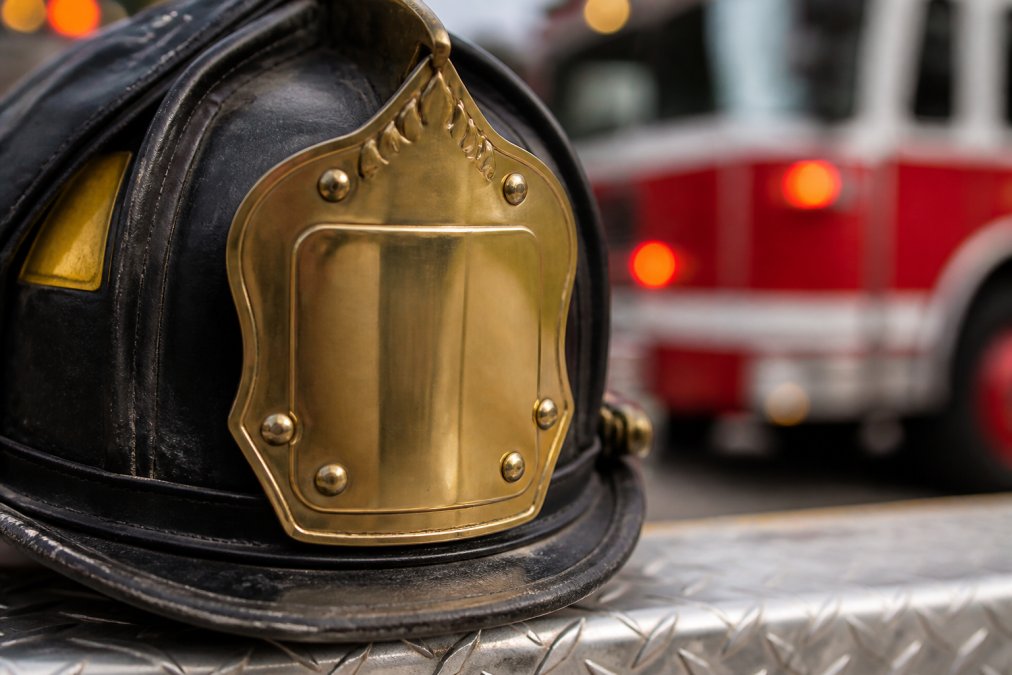
All American Brass Front Holder
Our flagship design places a classic brass front holder on a proven platform. It fits MSA and E.H. Coverings style leather helmets as well as the TL2, plus Cairns 1010 and 1044 and Morning Pride Ben 2 helmets. At $65.00, it is the model most firefighters choose for a traditional brass look that outlasts a career.
Black All American Brass
Not every firefighter wants a bright brass finish on the fireground. The Black All American Brass revives a popular design, reworked and strengthened, in matte or gloss black. It fits the same helmet range and ships with three rivets and a sticker pack. At $65.00, it suits crews who prefer a subdued, low-glare holder.
Customizable All American Brass
For departments and individuals who want their own mark on a helmet, the Customizable All American Brass is the most flexible option. Available in brass, matte black, or gloss black, it fits the same helmet lineup and comes with three rivets and a sticker pack. At $75.00, it suits company or department orders.
Department-Specific Brass Front Holders
Several holders carry a specific department's identity. The DCFD All American Brass at $50.00 delivers the same fit and finish options. The PGFD IAFF Local 1619 Black All American Brass at $65.00 serves members who want their local's identity on the helmet. The San Francisco Fire Department Brass Front Holder at $85.00 comes in brushed or polished finishes.
Fire Helmet Hardware Maintenance: Rivets, Seam Bands, and Crowns
Keeping a leather helmet in service means treating the hardware as a system, not a single piece. Rivets, seam bands, and crowns each take different wear and have a straightforward replacement path. The goal is to catch the small failures that become a loose front holder, a cracked crown, or a helmet that no longer sits right.
What Actually Wears Out
Brass itself is durable; failures that take a helmet out of service usually happen at the interfaces around it:
- Rivets loosen from repeated impact and from the leather shell flexing as it dries and re-wets. A rivet backed out even slightly lets the front holder shift, wearing the leather around the hole.
- Seam bands crack where they bend over the helmet's ribs. Once a band breaks, the leather panels it holds can separate at the seam.
- Crowns take the most overhead impact and sun exposure. A leather helmet's top dries faster than its sides, so the crown and its mounting points age first.
- Front holders rarely fail on their own. They fail because the hardware holding them has.
Replacement Parts and Current Pricing
- Rivets: Loose brass rivets for front holders and crowns come in sets of five at $6.00. Inspect them after every significant impact and replace any that have loosened or deformed.
- Seam bands: Brass seam bands replace worn or broken bands on leather helmets. Sold as a set of four at $23.00, with rivets not included, so order both together.
- Crowns: The DL Brass Crown at $20.00 is an All American product that restores the top of a leather helmet.
A common mistake is replacing a front holder while leaving tired rivets in place. The mounting points are only as strong as the hardware holding them, so replace both together.

Lubrication and Friction Reduction
Brass-on-brass and brass-on-leather contact points create friction, which wears rivets loose and elongates mounting holes.
- Keep lubricant off the leather. Leather and most petroleum-based lubricants do not mix. A light machine oil or a dry-film (PTFE) lubricant applied to the metal contact points only, with a cotton swab, keeps the leather clean.
- Lubricate the pivot and contact points, not the whole holder. A thin film where the front holder meets the shell and where rivets pass through is enough. Excess lubricant attracts grit, and grit is more abrasive than the friction you were trying to reduce.
- Reapply sparingly, not often. A light application once or twice a year, paired with cleaning, suffices for normal service.
- Wipe before you reapply. Old lubricant mixed with grit should be removed with a dry cloth before any new product goes on.
A Note on Inspection Intervals
No single schedule fits every department. A reasonable pattern: a quick visual check after every significant impact or working fire, a hardware inspection each season, and a full teardown-and-replace of rivets and seam bands whenever the helmet is reconditioned.
How to Polish Fire Helmet Brass Without Damaging the Finish
Polishing brass is where good intentions often cause damage. The goal is to remove tarnish, not material, and protect the finish.
Start with the gentlest method and escalate only if needed:
- Wash the brass with warm water and a mild dish soap, then dry it completely with a soft cloth.
- Apply a non-abrasive brass polish with a microfiber cloth, working in small circles.
- For matte or gloss black finishes, skip abrasive polish entirely and use only a damp cloth.
- Rinse away polish residue, because leftover compound traps grit against the surface.
- Apply a thin coat of brass protectant to slow future tarnish.
A front holder cleaned gently twice a year will look better after a decade than one scrubbed aggressively every month.
Brass vs. Alternative Materials: Durability and Sustainability
Brass is an alloy of copper and zinc, and that composition is why it performs so well on a fire helmet: it resists corrosion, machines cleanly, and holds fine detail through engraving and forming.
A Structured Comparison for Load-Bearing Scenarios
| Material | Corrosion Resistance | Strength / Impact | Heat Behavior | Repairability | Best Fit |
|---|---|---|---|---|---|
| Brass (copper-zinc) | High; develops a stable patina rather than rusting through | Good; holds shape under repeated handling | Stable at fireground temperatures; no melting or softening in normal use | High; can be re-polished, re-formed, re-mounted | Front holders, crowns, and decorative hardware that must survive decades |
| Plated steel | Low once plating fails; base metal rusts at chips and edges | High | Stable | Low; re-plating is rarely economical | Budget parts where the coating will not be abraded |
| Stainless steel | High | Very high | Stable | Moderate; hard to machine and finish | Structural brackets and high-load mounts, not fine detail |
| Bronze (copper-tin) | High | High; harder than brass | Stable | Moderate | Wear surfaces and bearings, not decorative fronts |
| Aluminum | Moderate; oxidizes but does not rust through | Low; dents and deforms under impact | Softens at high heat | Low | Weight-sensitive parts that will not take impact |
| Nylon / composite | High (does not corrode) | Low to moderate; degrades with UV and heat | Softens and can deform | None | Low-cost, non-structural parts |
How to Read the Table
Brass and bronze resist corrosion by forming a surface layer that protects the metal underneath rather than flaking away.
Stainless steel is stronger than brass and right for structural, hidden parts.
Aluminum and composites are the lightest options and the weakest under impact.
The Sustainability Argument, Stated Honestly
The sustainability case for brass is that brass is highly recyclable and a repairable part replaces a disposable one: scrap brass retains most of its value and is routinely remelted into new alloy, re-entering the supply chain rather than a landfill.
A solid brass front holder can be re-polished, re-mounted, and passed down, while plated and composite parts are discarded once the coating fails or the plastic deforms. Choosing a part that lasts a career means fewer replacements, less packaging and shipping, and less money over time. Domestic sourcing reinforces that: shorter supply chains mean fewer miles per part and tighter oversight of the alloy.
The NFPA standards for fire helmet and protective equipment set the baseline for helmet performance and modification, and any hardware you add should be evaluated against those requirements. For material and machining context, the Copper Development Association guidance on brass alloys explains how copper-zinc alloys behave under load and moisture. For firefighter safety research and equipment guidance, the NIOSH firefighter safety resources is a useful reference when assessing any modification to issued gear.
Frequently Asked Questions
What are the benefits of using brass for fire helmet hardware?
Brass offers corrosion resistance and holds up to repeated polishing without pitting. It has a low coefficient of friction, so moving parts like rivets and seam bands wear less. American made brass gear from EH Coverings is built from domestic materials and designed to last a full career. The metal also takes engraving and custom finishes well, which matters for department pride and helmet presentation.
How do I maintain brass front holders on my fire helmet?
Wipe the holder with a soft cloth after each shift to remove soot and moisture. Check rivets every few weeks for looseness and replace any that feel loose with brass hardware. For deeper cleaning, use a mild soap and water solution, then dry immediately. Avoid abrasive pads that scratch the surface. A yearly inspection of seam bands and the crown helps catch wear before it becomes a repair.
Are American-made brass gears more durable than imported alternatives?
Domestic brass is often produced to tighter tolerance levels and with known alloy content. Imported brass may vary in composition, which can affect wear resistance and how well it holds a polish. That consistency means the gear you install today fits and performs the same as the replacement you order years later.
What should I look for when buying brass helmet accessories?
Confirm the holder fits your helmet model, whether that is MSA, Cairns 1010 or 1044, Morning Pride Ben 2, or E.H. Coverings style. Ask about rivet compatibility and whether mounting hardware is included. Finally, verify domestic sourcing if supporting American manufacturing matters to you.
How do I install a new brass front holder on my helmet?
Most front holders come with three rivets for mounting. Align the holder on the helmet front, mark the rivet holes, and drill pilot holes if needed. Set the rivets with a rivet tool or have a leather shop do it if you are not comfortable. Check that the holder sits flush and does not interfere with the helmet's integrity. Test the fit before final riveting to avoid extra holes.