

Table of Contents
- Handmade Leather Gear Outlasts Mass Production
- Is Custom Leather Gear Good for Daily Use
- Full-Grain Leather and Superior Craftsmanship
- Benefits of Full-Grain Leather for Fire Service
- How to Maintain Handmade Leather Gear
- Investment Value and Cost-Per-Wear
- Sustainability and Supporting American Craftsmanship
- Frequently Asked Questions
Last Updated: September 30, 2026
Handmade Leather Gear Outlasts Mass Production
Choosing handmade leather gear for your duty helmet means investing in durability that extends far beyond aesthetics. Handmade craftsmanship outlasts mass production in both longevity and performance.
Mass-produced leather goods optimize for volume, cutting corners on stitching, materials, and finishing. Handmade leather gear with saddle stitch and full-grain leather is built to last.
Why Saddle Stitch Outperforms Machine Stitching
Saddle stitch uses two needles working simultaneously, creating an interlocking pattern where each stitch passes through the previous one. If a single thread breaks, adjacent stitches hold the seam intact. The stitch sits deeper in the leather, distributing stress across a larger area.
Mass-production uses lock stitch machines, which are faster but mechanically weaker. If the top thread breaks, the entire seam unravels. Lock stitch sits shallower in leather, concentrating stress at needle holes.
For fire service gear, this distinction is critical. Chin straps experience repeated stress from donning, sweat, and heat cycling. Saddle-stitched seams are designed for durability.
Handmade means accountability. An artisan's reputation depends on every stitch. At EH Coverings, we build brass front holders and leather accessories designed to outlast the firefighter wearing them.
Is Custom Leather Gear Good for Daily Use
Custom handmade leather gear performs exceptionally well for daily fire service use because it's engineered for your specific needs, not manufactured to a generic standard.
Customization lets you specify materials, hardware quality, and construction methods. You control whether your chin strap uses brass or stainless steel, edge finishing, and reinforcement at stress points.

Custom gear requires proper care, handmade leather needs maintenance.
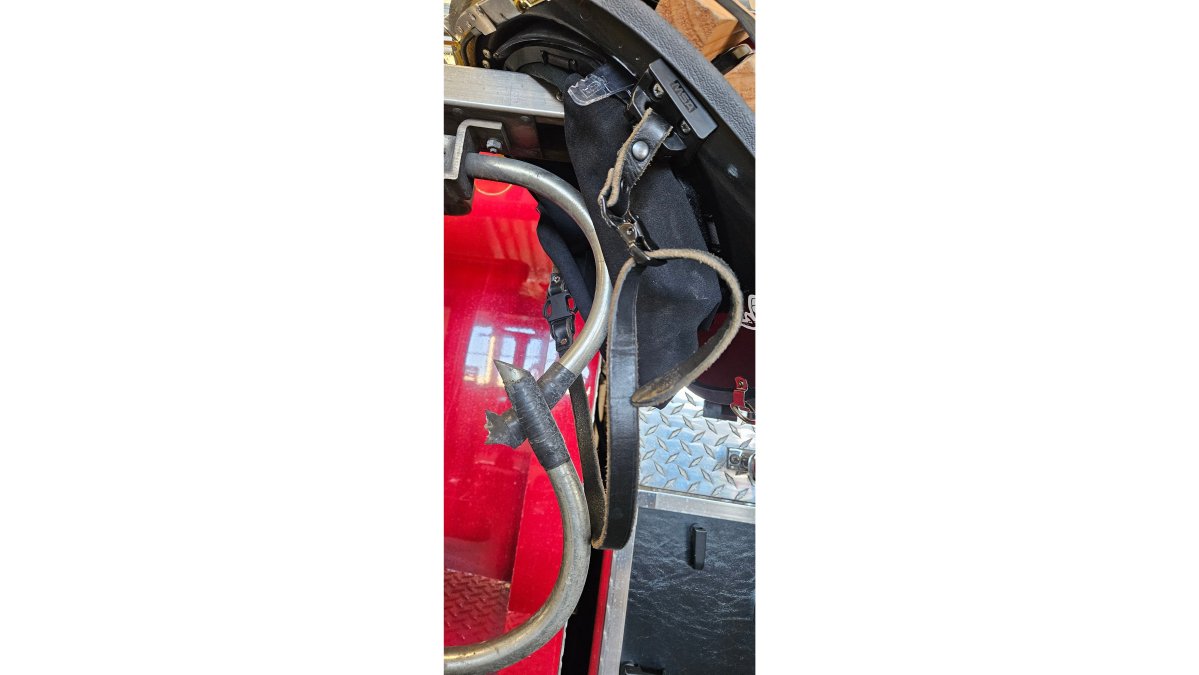
Full-Grain Leather and Superior Craftsmanship
Full-grain leather is leather in its most complete form, the entire hide is used without sanding. All natural characteristics remain: grain pattern, tensile strength, and the ability to develop patina.
Full-grain leather improves with use, becoming softer and more beautiful as it ages. Split or bonded leather alternatives are cheaper but fail faster.
Superior craftsmanship means hand-stitching creates stronger seams with tighter, more consistent overlap. Edge finishing prevents fraying. Brass front holders from EH Coverings are made from all American material in an American factory, designed to fit MSA, E.H. Coverings, Cairns, and Morning Pride helmets without modification.
Benefits of Full-Grain Leather for Fire Service
Full-grain leather offers specific advantages for fire service professionals that synthetic or lower-grade materials cannot match. The material's natural properties align directly with fireground demands.
Full-grain leather withstands temperature exposure better than synthetics, which can melt. Sweat and moisture don't compromise structural integrity.
Full-grain leather is an investment piece because it can be maintained and restored.
The aesthetic consistency is another advantage. Your gear will look professional and intentional throughout your career. Handmade leather develops a rich patina, a darkening and softening of the surface, that signals durability and experience. This isn't deterioration; it's the material aging gracefully. Many fire service professionals view their gear's patina as a badge of their years on the job.
How to Maintain Handmade Leather Gear
Proper maintenance is straightforward. Leather is a living material that responds to its environment, and the care you provide directly determines how it ages.
Understanding Leather's Response to Moisture and Heat
Full-grain leather is hygroscopic, it absorbs and releases moisture based on humidity. Fire service gear experiences extreme moisture stress from sweat, water exposure, and humidity cycling. Without proper care, moisture weakens fibers and accelerates deterioration.
Heat breaks down leather's natural oils, making the material brittle and prone to cracking. Storage location matters as much as active maintenance.
Cleaning Protocol for Fire Service Use
For stubborn stains or heavy salt buildup (common in humid climates), a 50/50 solution of white vinegar and water removes mineral deposits without harming the leather. Apply with a damp cloth, wipe clean, and dry immediately.
Conditioning: Timing and Technique
Choose leather-specific conditioners formulated for full-grain materials. Avoid silicone-based products, heavy oils, or furniture polish, which clog the leather's pores and create a waxy buildup that prevents natural aging and patina development. Quality conditioners typically contain lanolin or beeswax, which mimic the leather's natural oils.
Storage and Environmental Protection
In humid climates, consider using silica gel packets in your storage area to control moisture levels. Replace packets every 2-3 months, or when they become saturated.
Hardware Maintenance
If hardware shows green or white oxidation (verdigris or white rust), address it promptly. Oxidation can transfer to the leather and create permanent staining. Use a brass-specific cleaner or a mixture of lemon juice and salt, apply with a soft cloth, and rinse thoroughly with clean water before drying.
Seasonal Adjustments
After exposure to saltwater (coastal operations or winter road salt), clean and condition more frequently. Salt accelerates leather deterioration and hardware corrosion, so preventive care is especially important in these environments.
Investment Value and Cost-Per-Wear
The true cost of handmade leather gear becomes apparent when calculated across its lifespan. A quality full-grain leather chin strap from EH Coverings costs $40.
This calculation extends to brass front holders and other accessories. EH Coverings' All American Brass Front Holder is priced at $65, a one-time purchase designed to last your entire career. The investment is real, but so is the durability guarantee embedded in that price.
Beyond pure economics, there's the value of consistency. Your gear looks and performs the same way throughout your career. You're not learning new equipment every few years or adapting to different fitment standards. You invest once and benefit for decades.
Sustainability and Supporting American Craftsmanship
Choosing handmade leather gear means choosing sustainability. Mass production generates waste at every stage: offcuts from lower-grade leather, failed pieces discarded rather than repaired, packaging designed for single use. Handmade production minimizes waste because artisans use materials efficiently and build for longevity, not replacement cycles.
Full-grain leather itself is a sustainable choice. The vegetable-tanning process used in quality leather production relies on natural tannins from tree bark rather than harsh chemicals. The material is biodegradable and, when properly cared for, can last generations. At end of life, leather decomposes naturally, unlike synthetic alternatives that persist in landfills for decades.
Supporting American craftsmanship has direct economic impact. When you purchase from EH Coverings, you're supporting American workers in an American factory using all American materials. This isn't marketing rhetoric, it's the foundational commitment behind every product. Small-batch production by domestic artisans keeps manufacturing skills alive and creates jobs in communities that depend on this work.
The ethical dimension matters too. You know where your gear came from and who made it. You're not supporting exploitative labor practices or environmental damage in distant factories. You're investing in transparent, accountable production that aligns with your values.
According to the EPA's guidance on sustainable manufacturing, products designed for durability and repairability represent the most effective approach to reducing manufacturing waste. Handmade leather gear embodies this principle.
Choosing handmade leather gear for fire service means rejecting the disposable mindset. You're investing in durability, repairability, and craftsmanship that serves an entire career. The initial cost is higher, but the long-term value, measured in reliability, performance, and the satisfaction of owning something built to last, justifies the investment. EH Coverings specializes in this kind of gear: American-made brass front holders and custom leather accessories designed for firefighters who demand equipment as committed to the job as they are. When you're ready to upgrade your helmet setup with gear built to outlast your career, explore our full range of handmade options and discover why professional firefighters trust quality craftsmanship.
Frequently Asked Questions
Is handmade leather gear more durable than machine-made alternatives?
Yes. Handmade leather gear built with full-grain leather and hand-stitched seams withstands repeated stress better than mass-produced alternatives. The stitching in handmade pieces uses saddle stitch methods that distribute load across multiple thread points, creating stronger seams. Full-grain leather develops a protective patina over time, making it more resistant to wear.
What makes custom leather gear good for daily use in fire service?
Custom leather gear is engineered for the specific demands of fireground work. The material integrity of full-grain leather resists moisture, heat exposure, and abrasion better than synthetic alternatives. Customization also means you can specify hardware quality and edge finishing that meets your department's standards, ensuring your gear passes inspection while maintaining professional appearance.
How do I maintain handmade leather gear to keep it lasting?
Regular maintenance extends the life of handmade leather gear significantly. Store gear in a cool, dry place away from direct sunlight to prevent fading and material degradation. Inspect stitching and hardware regularly for any signs of wear. This preventive approach keeps your gear in service-ready condition throughout your career.
Why is full-grain leather better for fire service professionals?
Full-grain leather retains the hide's natural surface, preserving its tensile strength and durability. It resists punctures, abrasions, and moisture better than genuine or corrected-grain leather. The material develops a protective patina with use, actually becoming more rugged and water-resistant over time. For fire service work, this means your gear maintains its integrity through repeated exposure to heat, water, and rough handling. Full-grain leather also accepts customization, allowing you to mark your gear with department insignia or personal touches without compromising structural strength.